Cortisol is the molecule people love to hate.
Online, cortisol is portrayed like a villain that must be “lowered.” But biology is rarely that simple. Cortisol is a messenger—one of the most important. It mobilizes energy, sharpens attention, and coordinates immune and metabolic responses so you can survive a world that sometimes really is dangerous.
“It is not events that disturb people, it is their judgments concerning them.” — Epictetus.
The problem is not cortisol. The problem is chronic cortisol signaling—when the system that was built for short emergencies becomes the background music of your life.
This is why cortisol feels double-edged: acute cortisol is power. chronic cortisol is erosion.
1) The HPA axis: how stress becomes chemistry
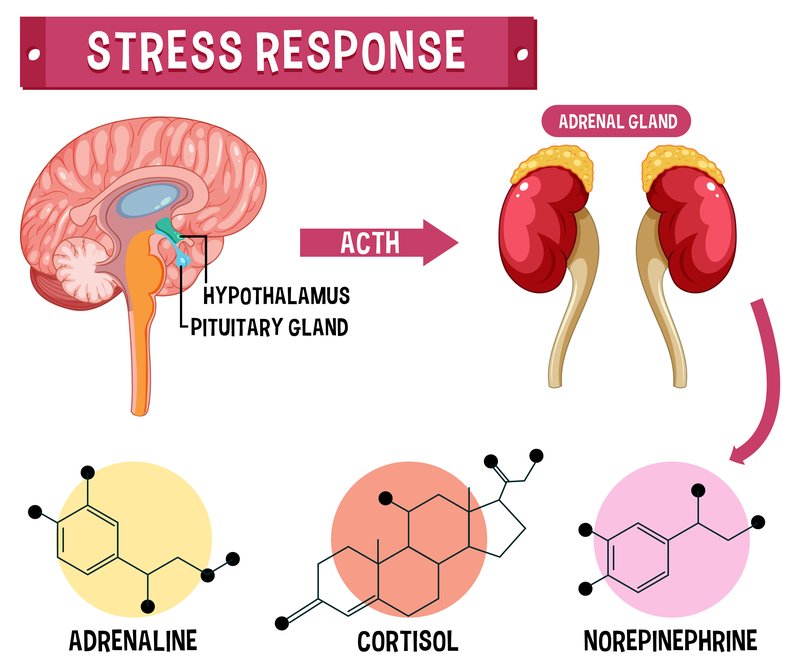
Cortisol is produced through the HPA axis (hypothalamic–pituitary–adrenal):
- Hypothalamus releases CRH (corticotropin-releasing hormone).
- Pituitary releases ACTH (adrenocorticotropic hormone).
- Adrenal cortex releases cortisol.
This axis is not “bad.” It’s one of your core survival systems. It helps you wake up, respond to demands, and regulate inflammation. But it’s designed around a crucial assumption: after the threat passes, you return to baseline.
Modern life breaks that assumption.
2) What acute cortisol does (and why you need it)
In the short term, cortisol:
- Increases glucose availability (fuel).
- Supports blood pressure (mobilization).
- Modulates immune activity (prevent overreaction).
- Amplifies learning under stress (memory formation in high-salience events).
This is why the morning cortisol rise (the cortisol awakening response) is normal physiology for many people. Your body is not “inflamed with stress” because cortisol rises in the morning. It is preparing you to exist.
Science Note (Acute vs Chronic): Reviews of stress physiology emphasize that cortisol is context-dependent: short, time-limited elevations can be adaptive, while prolonged activation contributes to downstream wear-and-tear (allostatic load). (McEwen, 1998)
3) Chronic cortisol: allostatic load and the slow reshaping
When stress is chronic—financial uncertainty, social conflict, overwork, caregiving without support—the HPA axis shifts from acute response to persistent tone. This is part of what researchers call allostatic load: the cost of adaptation when the body must constantly adjust.
Chronic cortisol signaling is associated with:
- Sleep disruption (especially early awakenings).
- Increased anxiety and threat bias.
- Memory and attention fragility (hippocampal and prefrontal strain).
- Metabolic shifts (appetite changes, visceral fat bias in some contexts).
Importantly, chronic stress can also create cortisol dysregulation—not simply “high cortisol,” but altered rhythms: blunted morning rise, elevated evening cortisol, or unstable pulses. The rhythm is often as important as the absolute level.
Research Note (HPA dysregulation): Meta-analytic and review work suggests chronic stress is associated with altered HPA-axis dynamics and cortisol rhythms rather than a single “always high” pattern. (Miller, Chen & Zhou, 2007)
4) Brain targets: hippocampus, amygdala, prefrontal cortex
Three brain regions are especially central in the chronic stress story:
- Hippocampus: memory and context. Chronic stress is linked to reduced hippocampal volume in some studies and impaired contextual learning.
- Amygdala: threat detection. Stress can sensitize amygdala responses, making neutral events feel sharper and more urgent.
- Prefrontal cortex: regulation and planning. Under chronic strain, the prefrontal “brakes” become less reliable.
This is why chronic stress feels like a loss of self. It’s not moral weakness—it’s circuitry under load.
5) The correction: reduce threat tone, not “cortisol”
You don’t heal by obsessing over a hormone. You heal by changing the inputs that keep the HPA axis armed.
A) Stabilize sleep timing
Sleep is the main reset signal. Without it, interventions become cosmetic. Aim for consistency more than perfection.
B) Build daily “off-ramps”
- Short walks without media.
- Breathing that lengthens exhale (parasympathetic cue).
- Small, repeated moments of safety and orientation.
C) Reduce conflict exposure where possible
Chronic interpersonal threat is one of the strongest drivers of stress dysregulation. Boundaries are not a lifestyle trend; they are endocrine hygiene.
Field note
For years I tried to “optimize cortisol.” It never worked. What worked was simpler and harder: I reduced the amount of life that felt like an emergency.
And then cortisol stopped being a villain. It went back to being what it is: a messenger. Accurate. Honest. Responsive.
Practical takeaways
- Identify the trigger: name the state (not the identity).
- Reduce baseline load first (sleep, conflict input, chronic overstimulation).
- Use small downshifts daily (walks, longer exhales, orientation).
- Track patterns over weeks, not hours—states change through repetition.
Internal links
If cortisol feels like the background music of your day, study these guides:
- Hypervigilance: The Exhausted Watchman (Always On, Never Safe)
- Dissociation: The Emergency Brake of Consciousness
- Allostasis: The Cost of Adaptation (Beyond Homeostasis)
I’m building MindWaves as a quiet space for the overclocked. No ads, no noise, just signal.
If this article helped you reduce the threat tone today, consider supporting the project ☕

— Jericho.